Save $50 on Qualifying Repairs


Thermostat Installation and Repair
Take Better Control of Indoor Temperatures
Improve Comfort With Thermostat Installation Services in Odessa, TX
Your thermostat serves as the control point between you and your heating and cooling equipment. When it works correctly, you can set the temperature and expect the HVAC system to respond accordingly. When the thermostat is outdated, incorrectly calibrated, improperly wired, or no longer communicating correctly with the equipment, maintaining comfortable indoor temperatures can become much more difficult.
Thermostat problems can appear in several ways. The display may stop working, the temperature shown on the screen may not match conditions inside the property, or the HVAC equipment may not start when expected. Some systems may run longer than necessary, cycle inconsistently, or fail to maintain the selected temperature. In other cases, property owners simply want to replace an older control with a programmable or smart thermostat that better fits their daily routine.
Rocky’s A/C & Heating provides thermostat installation services in Odessa, TX, for residential and commercial properties. We install and troubleshoot traditional, programmable, and smart thermostats while considering compatibility with the heating and cooling equipment already in place. Our work can include thermostat replacement, thermostat repair, smart thermostat installation, programmable thermostat installation, HVAC thermostat wiring, calibration, smart thermostat setup, and multi-zone controls.
Installing a thermostat involves more than attaching a new device to the wall. The control needs to be compatible with the HVAC equipment and wired correctly so the system responds as intended. Smart and programmable models may also require configuration based on the equipment and the features the property owner wants to use.
When an existing thermostat is causing problems, we begin by evaluating the symptoms instead of assuming replacement is necessary. Wiring, calibration, controls, or another part of the HVAC system may contribute to the issue. We troubleshoot the control and relevant equipment to identify what is preventing normal operation, then explain the available options.
Rocky’s A/C & Heating has served Odessa and surrounding West Texas communities since 2015, backed by 35 years of hands-on HVAC experience. We bring straightforward communication and quality workmanship to thermostat work for homes and businesses.
Whether you are replacing an outdated control, installing a smart thermostat, or troubleshooting inconsistent temperature control, choose Rocky’s A/C & Heating for thermostat installation services in Odessa, TX, tailored to your HVAC equipment and comfort preferences.

Take Better Control of Your Indoor Comfort
Replace an outdated thermostat, install smart controls, or troubleshoot temperature problems with careful setup based on your heating and cooling equipment.
Match Your Thermostat to the Way Your HVAC System Operates
Install, Replace, or Troubleshoot Your Temperature Controls
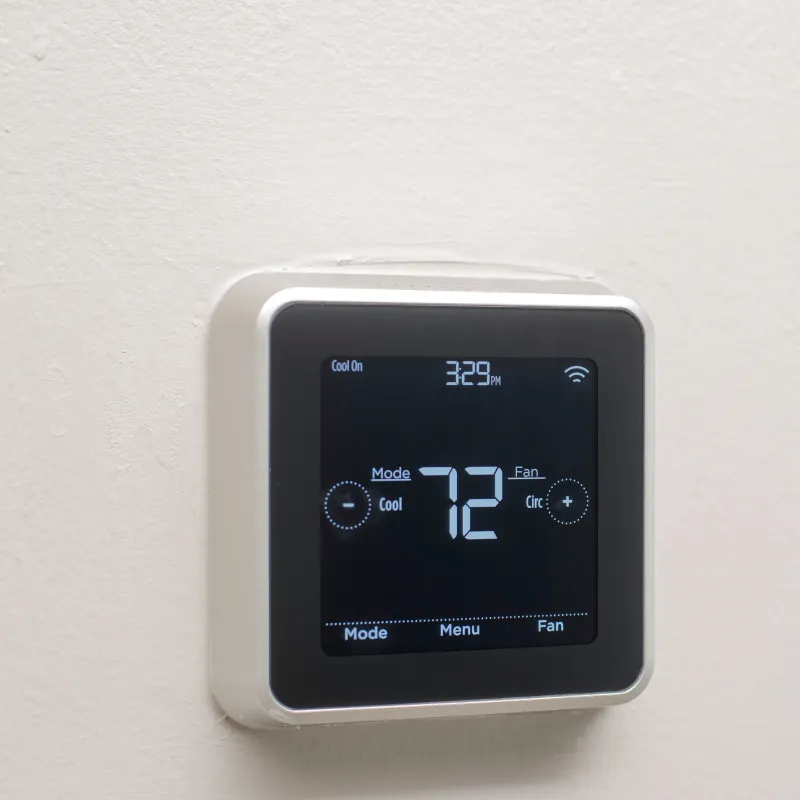
A thermostat may be one of the smallest parts of an HVAC system, but it has an important role in controlling when heating and cooling equipment operates. It senses indoor temperature, receives your settings, and communicates with the system to help maintain the conditions you select. When that communication is interrupted, the problem can affect comfort throughout the property.
Some thermostat concerns are immediately noticeable. A blank display, unresponsive controls, or a system that will not turn on can quickly lead a property owner to suspect the thermostat. Other issues are more subtle. The displayed temperature may differ from how the room actually feels. Equipment may cycle more frequently than expected, continue running after reaching the selected temperature, or fail to maintain consistent conditions.
Thermostat repair begins with determining whether the control itself is responsible for the problem. HVAC systems contain many components that influence operation, so symptoms that appear to involve the thermostat can sometimes originate elsewhere. We evaluate the control, wiring, settings, and relevant system operation before recommending the appropriate next step.
Rocky’s A/C & Heating works with several thermostat and control needs:
- Thermostat replacement: We replace outdated, damaged, or malfunctioning controls with compatible equipment selected for the heating and cooling system.
- Thermostat installation: We install controls with attention to wiring, equipment compatibility, placement, setup, and normal HVAC operation.
- Smart thermostat installation: We install compatible smart controls for customers who want updated temperature management and available scheduling features.
- Programmable thermostat installation: We install programmable controls that allow property owners to create temperature schedules around normal occupancy and routines.
- Thermostat repair: We troubleshoot control problems to determine whether repair, adjustment, wiring work, or replacement may be appropriate.
- HVAC thermostat wiring: We evaluate and correct thermostat wiring concerns that can interfere with communication between the control and HVAC equipment.
- Smart thermostat setup: We configure applicable thermostat functions and make sure the control communicates properly with compatible heating and cooling equipment.
- Thermostat wiring repair: We address wiring conditions that may contribute to intermittent operation, incorrect equipment response, or other control problems.
- Thermostat calibration service: We evaluate temperature readings and control behavior when the thermostat does not appear to reflect actual indoor conditions accurately.
- Zoned HVAC control: We work with controls used in applicable multi-zone systems where different areas require separate temperature management.
One reason property owners choose a smart thermostat installation is the ability to manage temperature settings differently than with a basic manual control. Depending on the thermostat and HVAC system, smart controls may offer scheduling, remote access, or other functions. These features can be useful for homeowners who have changing daily routines or businesses that want different temperature settings during occupied and unoccupied periods.
However, a smart thermostat still needs to work correctly with the HVAC system. Not every control is appropriate for every equipment configuration. Wiring requirements, system type, and available control functions can influence compatibility. Before installation, these factors should be considered so the thermostat can communicate properly with the equipment.
A programmable thermostat installation can offer a simpler option for customers who want scheduled temperature changes without all the functions of a connected control. A programmable thermostat can be configured around typical occupancy patterns, allowing the property owner to establish different settings for specific times of day.
Traditional thermostats can also remain a practical choice for many properties. The right control is not necessarily the one with the most features. It is the one that works with the HVAC equipment and gives the customer the level of temperature control they want.
Thermostat location can also affect how a control reads indoor conditions. The thermostat needs to sense temperature in a location that reasonably represents the space being conditioned. If the control is affected by unusual heat, drafts, or another environmental condition, its readings may not reflect conditions throughout the property. When evaluating temperature-control problems, we consider factors that may influence thermostat operation.
Wiring deserves similar attention. HVAC thermostat wiring carries control signals between the thermostat and heating or cooling equipment. A loose, damaged, incorrect, or incompatible connection can prevent the system from responding normally. In these situations, simply replacing the thermostat may not resolve the underlying problem.
Calibration is another possible source of trouble. When a thermostat reading differs from actual room conditions, the HVAC equipment may start or stop at the wrong time. A thermostat calibration service can help determine whether the control is reading temperature correctly or whether another issue is affecting comfort.
Multi-zone properties have additional control requirements. A zoned HVAC control setup may use multiple thermostats or related components to manage temperatures in separate areas. These configurations can be useful in properties where different rooms or zones have different comfort requirements. Troubleshooting them requires considering how the controls interact with the rest of the system.
Commercial properties may also have different thermostat needs from a typical home. Offices, stores, restaurants, churches, managed properties, and other facilities often have established operating hours and changing occupancy levels. A thermostat setup that accounts for how the property is used can make temperature management more practical for staff and occupants.
For homeowners, thermostat replacement may be considered when an older control becomes difficult to use, no longer operates consistently, or does not provide the scheduling functions the household wants. Customers may also consider replacing a thermostat when new heating or cooling equipment is installed.
Thermostat concerns can sometimes be mistaken for larger HVAC failures. If an air conditioner or furnace does not start, it is natural to assume something major has failed. In some cases, the control or its wiring may be involved. In other situations, the thermostat may be functioning normally while another system component is causing the problem. Careful troubleshooting helps separate these possibilities.
That distinction is particularly important when the property is uncomfortable. Replacing parts without identifying the cause can add unnecessary cost without correcting the issue. Our approach is to evaluate the symptoms, inspect the relevant controls and equipment, and explain what we find before discussing repair or replacement.
Get Help With Your HVAC System
Tell us what is happening with your heating or cooling system, and we will help identify the right next step.
